In 2012 I found myself at the lowest point of my life.
On the outside, things probably looked normal. I had a job. I was functioning. Life was moving forward. But internally, everything had collapsed. My wife had run off with another man. My finances were in terrible shape. My career was nothing more than a paycheck to keep money coming in, and I hated it.
For most of my life up to that point, I thought I was happy. Looking back now, I realize I wasn’t unhappy enough to change anything.
But in 2012 the illusion finally broke.
When something like that happens, you go through a fog. A heavy fog where the days blur together and you’re simply trying to survive emotionally. For me that fog lasted years.
It wasn’t until around 2015 that I truly started coming out of it.
And when I did, I asked myself a question that changed everything.
What is actually wrong with my life?
For the first time, I decided to look at everything honestly. Not to blame other people. Not even to blame myself. Just to evaluate.
That’s when I realized something very simple but very powerful.
I was the common denominator in everything that had gone right and everything that had gone wrong in my life.
That realization gave me control. If I was the common denominator, then I could also be the one who made changes.
So I began studying my own life like a system. What worked? What didn’t? Why had I been unhappy even when life looked “successful”? I began examining past relationships, past decisions, career choices, spending habits, and the patterns that kept repeating.
Slowly, I started making changes.
The First Change: Money
Early in that process I decided to start with finances. Not because money was the biggest emotional problem, but because it was the easiest place to begin.
Money is numbers. Numbers are measurable. Numbers are logical.
As an engineer, numbers made sense to me.
So I began reducing debt, lowering expenses, and becoming intentional with every dollar. What surprised me was how much emotional relief came from something so practical.
Every time a debt disappeared… every time a recurring expense went away… I felt a little lighter.
The change was subtle, but it was noticeable.
The more financial pressure I removed, the calmer I became.
That realization made me curious, so I started documenting what I was doing.
The Whiteboard
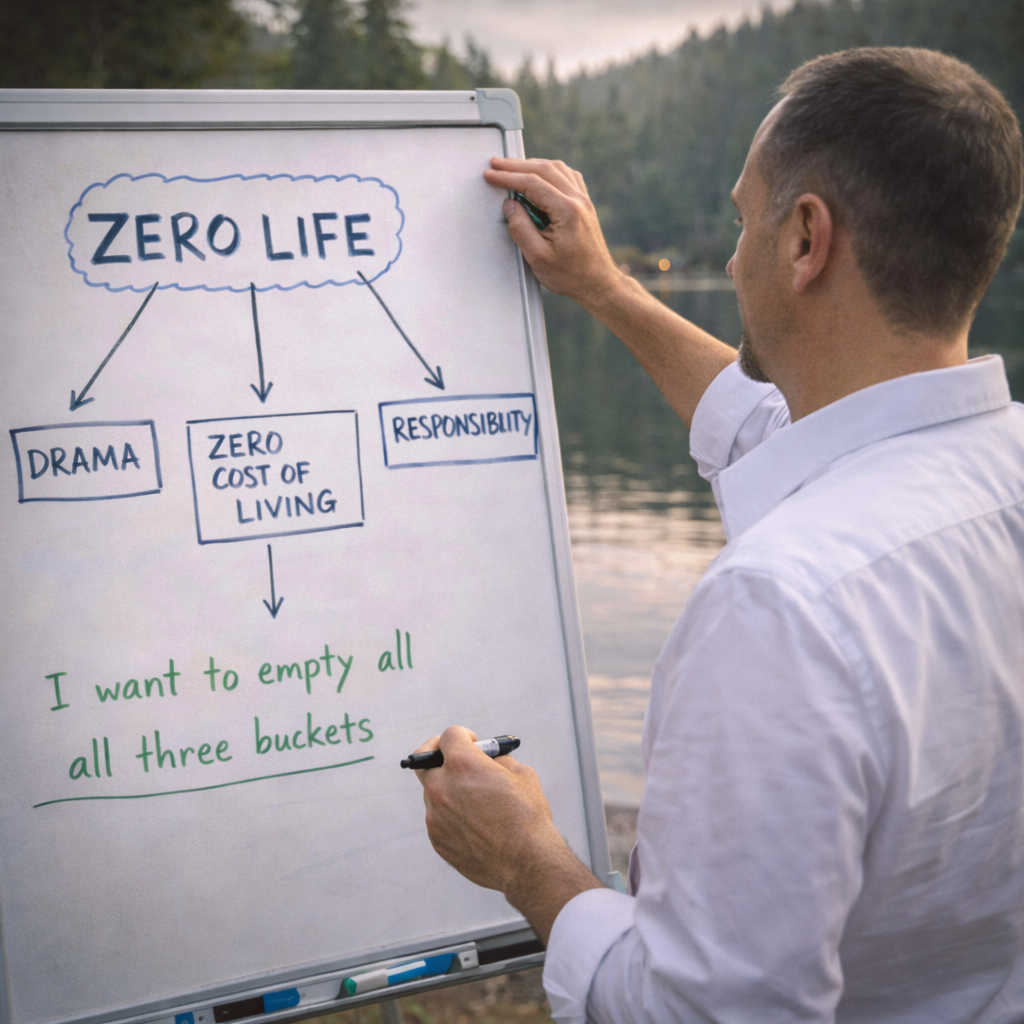
At work I had a whiteboard in my office. Being an engineer, my natural instinct was to map things visually. So I began drawing flow charts. Every change I made in my life went on that board. Every improvement. Every realization. Every shift.
I was essentially engineering my life.
But something else happened during this time that changed everything.
Learning to Say No
For years I had been a “yes” person at work.
If someone needed help, I said yes. If someone had a project, I said yes. If someone wanted to add another responsibility to my plate, I said yes.
Eventually I found myself managing my own projects plus pieces of everyone else’s. I was stretched thin and constantly overwhelmed.
Then one day someone asked me to take on another project.
And for the first time…
I said no.
My mentor had been helping me learn this skill, but saying it out loud still shocked me. What surprised me even more was what happened next.
Nothing bad happened.
No one got angry. The world didn’t collapse.
Instead, something inside me shifted. I felt in control of my time. I had protected my energy.
So I ran back to the whiteboard and added another leg to my flow chart.
I called it Responsibility.
The Drama Problem
Around the same time I began noticing another pattern in my life. I had unknowingly become the emotional dumping ground for many of my friends.
Everyone brought their chaos to me. Relationship problems. Work frustrations. Family issues.
And because I cared about them, I always listened. I always tried to help.
But eventually something became obvious.
I was carrying everyone else’s chaos on top of my own.
So I applied the same lesson I had learned at work.
I started saying no to the drama.
Not aggressively, but clearly.
And something interesting happened.
The more I pushed back, the less drama came my way.
Once again I ran to the whiteboard and added another leg to the chart.
I called it Drama.
The Three Buckets
At this point the whiteboard showed three major areas of life:
Responsibility
Drama
Cost of Living
As I studied the chart, something clicked.
Each one of those areas behaved like a bucket.
When the bucket was full, life felt heavy. When the bucket overflowed, life felt suffocating.
But when I reduced what was inside those buckets, something changed.
I wrote a sentence on the whiteboard that would shape the rest of my life.
I want to empty all three buckets.
That became the mission.
The Role of Reflection
During this time I also started journaling and meditating regularly. Reflection became an important part of the process. It helped me slow down, examine my decisions, and understand why certain patterns kept repeating in my life.
Journaling allowed me to see my own chaos more clearly. Meditation helped me calm my mind enough to actually evaluate it.
As I developed the Zero Life philosophy, I began adding reflection prompts to help others go through the same process.
Later someone suggested something interesting.
“Why not create a separate journal with all the prompts in one place so people can work through them more easily?”
That idea eventually became the Living The Zero Life Reflection Journal, which was designed to help readers identify their own chaos and apply the ideas from the book more quickly.
If you want to explore that tool, you can find it here:
https://livingthezerolife.com/love/reflect-journal-amazon/

The Zero Realization
As I continued revising my flow charts and studying what I was doing to improve my life, something interesting happened in my mind.
An empty bucket became a very clear symbol.
Zero.
That’s when the phrase appeared.
Living The Zero Life.
The goal wasn’t perfection.
The goal was zero unnecessary chaos.
Zero unnecessary drama.
Zero misplaced responsibility.
Zero financial pressure that didn’t need to exist.
Around that time I registered the domain name:
That was around 2015.
Ten Years Later
For the next decade I kept living this philosophy. Refining it. Testing it. Watching how it worked in real life.
I never originally intended to write a book. This was simply a survival technique I had built for myself during one of the hardest periods of my life.
But over time I realized something.
What helped me rebuild my life might help others rebuild theirs too.
So in 2025 I decided it was time.
I wrote the book Living The Zero Life.
What started as a personal survival system became a simple framework anyone can use to reduce chaos and live more intentionally.
If you’re ready to start exploring the philosophy, you can begin here:
https://livingthezerolife.com/love/thebookamazon
You can also explore more articles and insights on the Zero Life philosophy here:
https://livingthezerolife.com/blogs
Join the Zero Life Movement
If this story resonates with you, you’re not alone.
Thousands of people quietly feel overwhelmed by responsibility, drama, and financial pressure.
Living The Zero Life is about reclaiming control.
If you’d like to receive more insights about the philosophy, reflections, and practical ideas for reducing chaos in your life, you can join the email list below.
This movement is just getting started.
And early readers often become the people who carry the message forward.
A Final Thought
My hope is simple.
That the ideas in Living The Zero Life help you breathe easier, think clearer, and live a calmer and happier life.
Sometimes transformation doesn’t come from adding more to your life.
Sometimes it comes from removing what was never yours to carry.