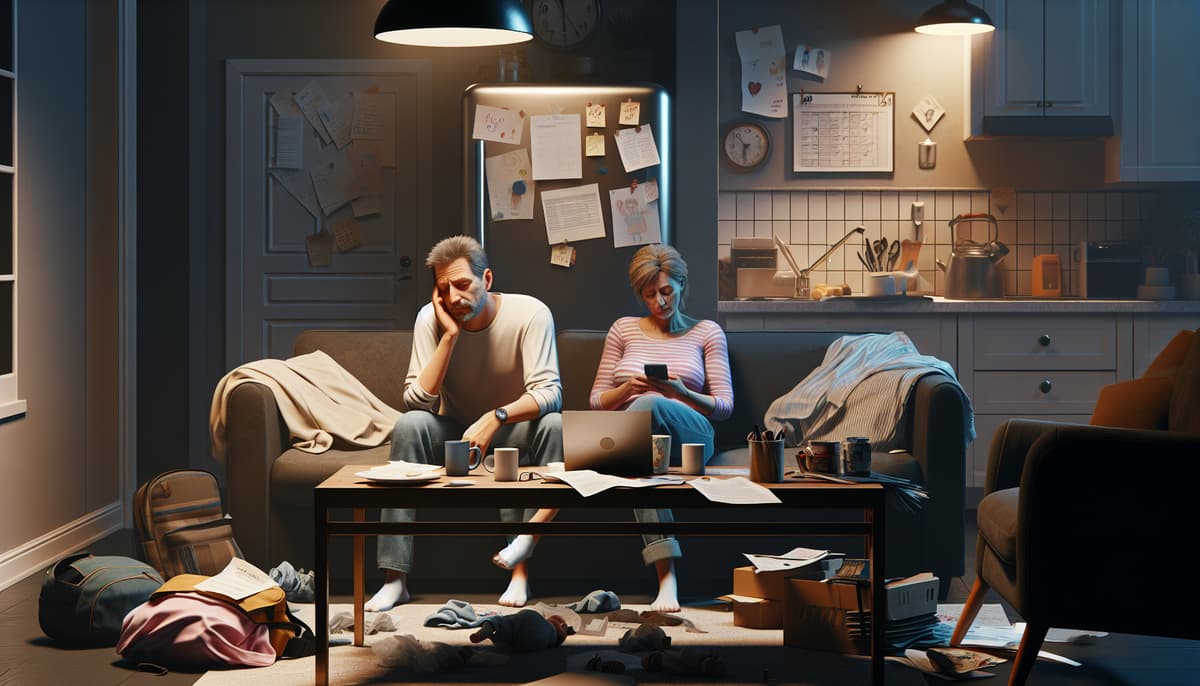
Marriage Burnout and Relationship Exhaustion from Responsibility Overload
You used to reach for each other without thinking.
Now you reach for your phone. Or the laundry basket. Or another cup of coffee because frankly you are shattered.
If you have been quietly wondering whether what you are feeling is marriage burnout, take a breath. You are not broken. Your love story has not necessarily expired. What you may be experiencing is something far less dramatic yet far more cumulative.
Your relationship has slipped into safe mode.
Just like a phone that overheats and starts shutting down background apps, your nervous system protects you when life becomes too much. Passion dims. Patience shrinks. Communication becomes transactional. What looks like indifference is often simple survival.
Today we are going to unpack why relationship exhaustion happens, why couples become roommates after kids, how responsibility overload marriage patterns flip your love circuits into protective mode, and what those so called gray divorce burnout signs are really trying to tell you.
And most importantly, how to reboot.
What Marriage Burnout Actually Feels Like
Marriage burnout is not explosive. It rarely begins with slammed doors or dramatic betrayals. It begins with sighs. With postponed conversations. With that subtle thought, I just do not have the energy for this.
You start operating like co managers of a small chaotic company called Life. The mission becomes survival. The meetings are about logistics. The romance department quietly lays off its staff.
Common signs of relationship exhaustion include:
- Feeling emotionally numb around your spouse
- Irritation over small things that never used to matter
- Decreased physical intimacy
- Conversations focused only on tasks and responsibilities
- Fantasy about being alone, not necessarily with someone else
Notice something here. None of these scream lack of love. They scream lack of capacity.
As someone who has worked with couples for years and built businesses while raising a family, I can tell you this with confidence. Burnout in marriage is rarely about the absence of love. It is about an overloaded system that has forgotten how to rest.
Why Couples Become Roommates After Kids
Let us talk about the question no one likes to say out loud. Why do couples become roommates after kids?
Because kids are beautiful. And relentless.
Sleep decreases. Financial pressure increases. Career demands do not magically pause. Your identity shifts overnight from lovers to parents. The mental load multiplies like rabbits at a garden party.
This is where responsibility overload marriage patterns begin to take root.
Think about your brain as having limited bandwidth. When you are juggling school schedules, work deadlines, aging parents, grocery lists, and the fact that someone just stuck a peanut butter sandwich to the wall, the nervous system prioritizes survival tasks.
Romance is not a survival task.
Connection becomes optional in the mind of an overloaded brain. And optional things get postponed.
Over time, postponed becomes unfamiliar.
You are not choosing to be roommates. Your system is throttling back to cope.
Responsibility Overload Marriage and Safe Mode Love
Here is the mechanism most relationship advice skips.
When stress becomes chronic, your nervous system shifts into protective patterns. Cortisol rises. Patience drops. Emotional availability shrinks. You become efficient, not affectionate.
This is what I call safe mode love.
In marriage burnout, the brain subtly decides that deep vulnerability is too costly. It requires energy you do not have. So it scales back.
You might notice:
- Shorter responses during conflict
- Avoidance of big emotional conversations
- Less initiation of touch or intimacy
- A constant feeling of being behind
This is not sabotage. It is your body saying, we cannot handle more input right now.
And here is the kicker. If both partners are overloaded, both nervous systems go into safe mode. Suddenly you have two exhausted people interpreting each other’s shutdown as rejection.
That is how relationship exhaustion deepens.
It becomes a feedback loop. You withdraw because you are tired. Your spouse feels the distance and withdraws too. Now both of you feel unseen.
No villain. Just two burnt out humans.
Gray Divorce Burnout Signs Are Not Always About Age
There is a rising conversation around gray divorce burnout signs, which refers to couples separating later in life. On the surface, it can look like people simply grew apart.
Sometimes that is true.
But often, what I see is decades of unaddressed marriage burnout. Years of responsibility overload marriage patterns. Careers. Children. Mortgages. Caregiving for aging parents. Retirement fears.
For so long, survival was the priority. Once the kids leave and the noise quiets, couples finally look at each other and think, who are you now?
The distance did not appear overnight. It accumulated.
Gray divorce burnout signs often include:
- Emotional indifference rather than conflict
- Separate lives under one roof
- Minimal curiosity about each other’s inner world
- A sense of missed years
Here is the hopeful part. Distance built over time can be unpacked over time. The brain is adaptable. Connection is relearnable.
The Overload Apps You Need to Close
If your marriage is in safe mode, you cannot fix it with date night alone.
Date night is lovely. But if the system is overheated, adding more activity is like opening another app.
We need to kill the overload apps first.
Start with an honest audit of what is consuming your joint bandwidth. In my coaching work, I guide couples through this exact exercise.
Common overload apps include:
- The invisible mental load of planning and remembering everything
- Unequal household responsibilities
- Unspoken resentment about career sacrifices
- Chronic financial stress
- Lack of personal alone time
Sit down together. Not to blame. To map reality.
Ask, where are we both stretched beyond capacity?
Then choose one thing to offload. Hire help if possible. Swap responsibilities. Simplify commitments. Cancel something that looks impressive on Instagram but drains your soul.
This is not quitting. This is strategic pruning.
When the nervous system senses reduced threat, it naturally increases openness. Affection often returns not because you forced romance, but because you restored capacity.
Rebuilding Connection After Relationship Exhaustion
Once you have reduced pressure, then we layer in reconnection.
But keep it simple. Grand gestures are overrated when you are recovering from relationship exhaustion.
Try this:
- Ten minute daily check ins with no logistics talk
- Intentional physical touch without expectation of sex
- Weekly appreciation statements, specific and sincere
- Revisiting a shared memory that reminds you of your early days
When couples ask me why couples become roommates after kids, I often respond gently. Because you stopped seeing each other as people and started seeing each other as roles.
Shift back to curiosity.
Ask, what has been weighing on you lately?
Listen without fixing.
It feels almost too simple. But safety is built in small repeated moments, not dramatic speeches.
You Are Not Failing, You Are Fried
There is so much shame wrapped around marriage burnout.
You scroll social media and see curated anniversaries and coordinated family photos and think, what is wrong with us?
Let me say this clearly. Burnout is not a character flaw. It is a capacity issue.
When your system has been in overdrive for years, numbness can masquerade as indifference. But indifference and depletion are not the same thing.
If you resonate with gray divorce burnout signs, if your home feels more like a shared office than a relationship, pause before making irreversible decisions.
Ask whether you are truly incompatible.
Or simply exhausted.
One can be healed. The other requires a different path. Wisdom is knowing the difference.
The Reboot
Your relationship does not need more pressure to perform.
It needs relief.
If you remember nothing else, remember this. When responsibilities pile up without intentional release valves, any partnership will eventually slip into responsibility overload marriage patterns. Emotional circuits dim to preserve energy. You do not stop loving. You start conserving.
There is agency here.
You can reduce commitments. You can redistribute labor. You can ask for support. You can choose small daily reconnection rituals. Capacity can be restored. Curiosity can return.
The spark you miss is often sitting beneath layers of stress, waiting for oxygen.
Reboot by killing the overload apps first; the spark reignites when the system stops fighting for survival.